India-Pakistan: Cricket’s costliest fixture goes missing
Pakistan’s proposed forfeit undermines JioStar’s $900 million tournament and the ICC funding system that sustains the game. Cricket has monetised the rivalry for years. The ledger finally became too heavy.


At 7:57 pm on Sunday, the Government of Pakistan announced on X that its cricket team would participate in the upcoming ICC Men’s T20 World Cup but would forfeit the match against India scheduled for February 15 at Colombo’s R Premadasa Stadium.
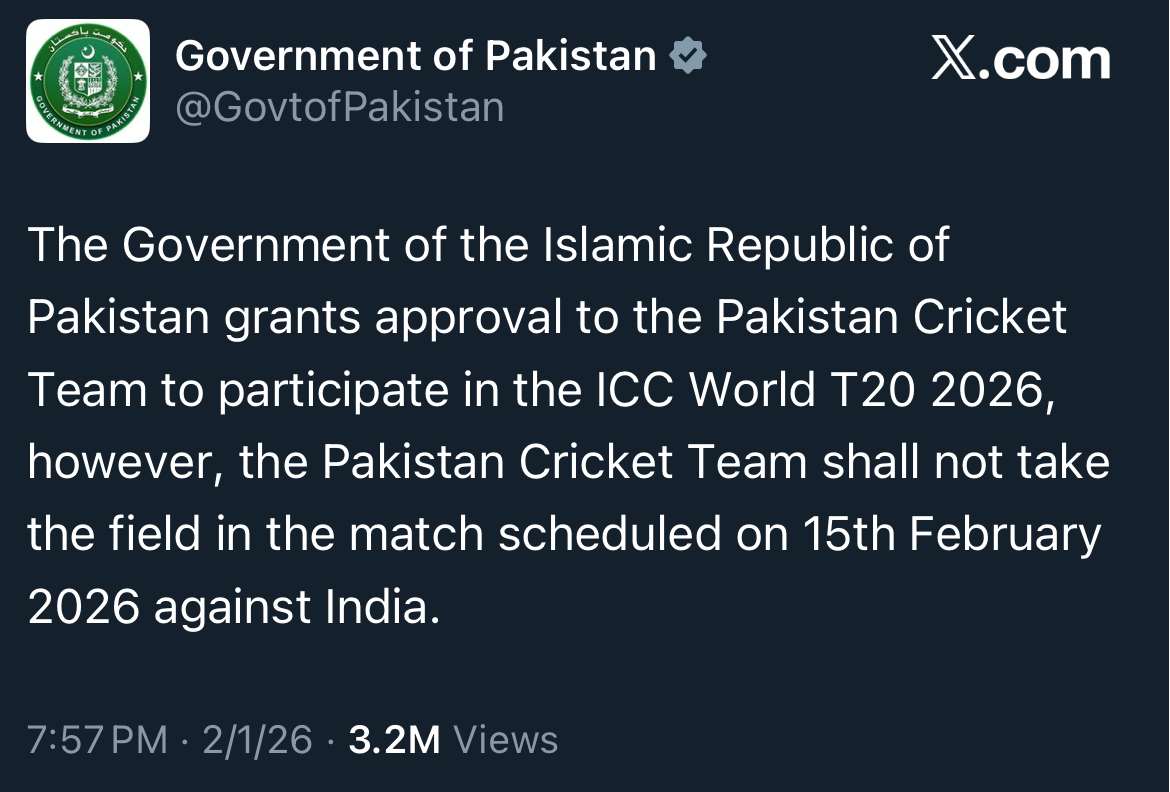
The forfeit, if executed, will remove cricket’s most valuable fixture from the tournament. Hours later, the International Cricket Council (ICC) warned of “significant and long-term implications” for Pakistan cricket.
While Pakistani journalists and officials framed the decision as an act of solidarity with Bangladesh, industry executives in Mumbai and Dubai saw it as an attempt to exploit the game’s financial dependence on the fixture.
JioStar’s broadcast deal with the ICC is already loss-making, and the broadcaster has no control over the political decisions that determine whether the match is played. The broadcaster is expected to seek a renegotiation with the global body once the tournament concludes, which could include extending the existing contract through 2029 at the same value.
Industry sources told The State of Play that, should Pakistan follow through on its threat to boycott the tie, the broadcaster is also exploring legal options against the ICC. Any fall in ICC broadcast revenue shrinks the grants pool. The Pakistan Cricket Board (PCB) faces cuts to its share of ICC revenue (5.75%), less money also available to smaller cricketing nations.
Cricket built its media-rights model around a fixture that no contract can guarantee will take place.