Inside cricket’s $3 billion workaround
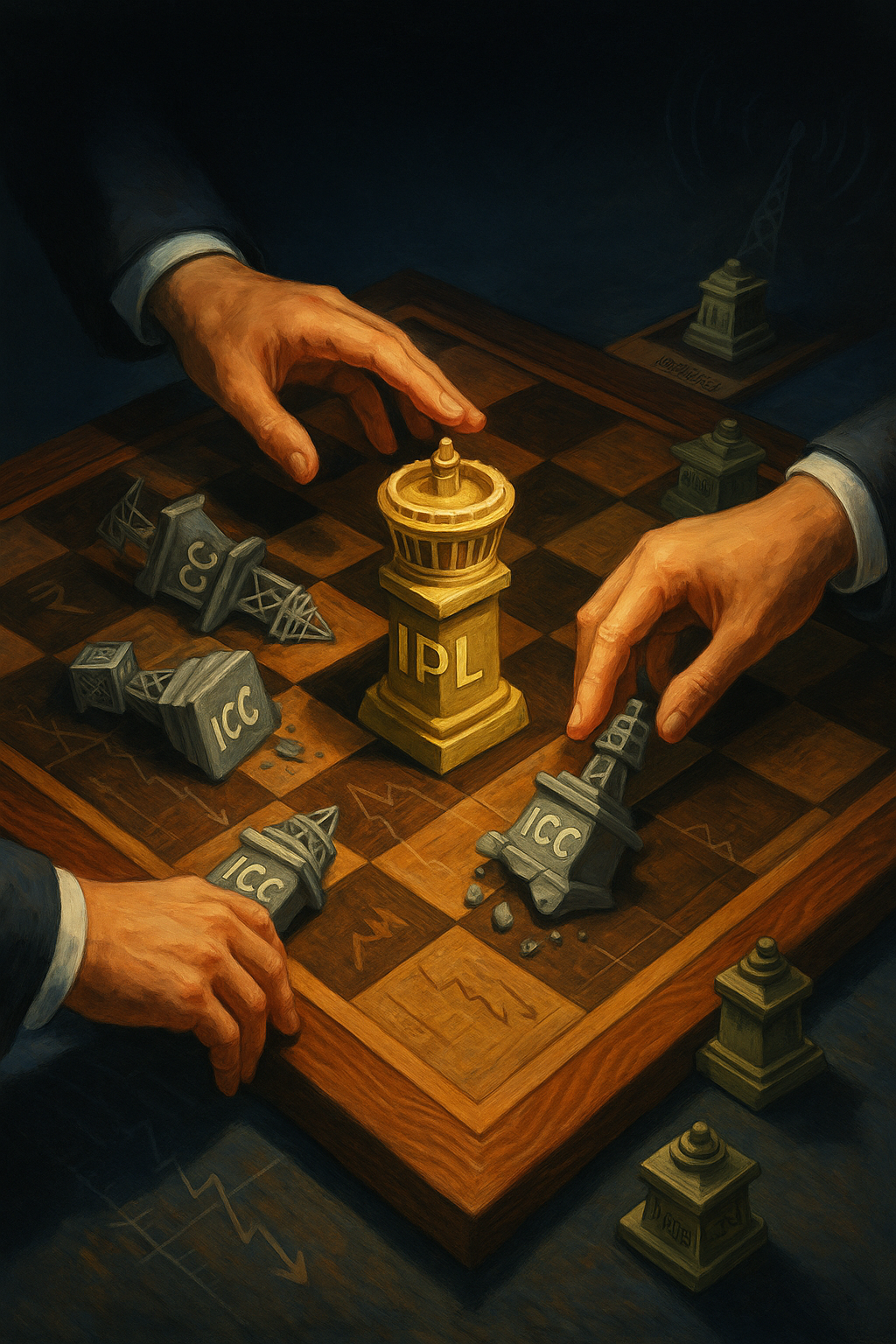
JioStar is locked into a $3 billion contract it cannot afford or exit. The workaround will show whether Indian cricket’s decade of growth was sustainable or inflated.

By the time JioStar informed the International Cricket Council (ICC) that it could no longer support the remaining term of its four-year, $3 billion media rights deal for the India market, the industry had been expecting it for months..
The broadcaster and the ICC have been exploring ways to rework the agreement for weeks, including an extension on terms they have yet to agree. The Economic Times reported the talks on Monday.
JioStar dominates Indian cricket broadcasting. The broadcaster owns Indian Premier League (IPL) rights through 2027, holds the ICC deal now under strain, and carries the bilateral agreements for India’s home season. The ICC deal is also unusually rigid, leaving the broadcaster with little room to cut its costs or exit. The cost of those agreements will influence what JioStar can pay when IPL rights return to market in 2027.
JioStar and the ICC did not respond to The State of Play’s requests for comment.
People familiar with the discussions say JioStar is examining a two-year extension of its ICC rights through 2029, the two sides disagree on price. The ICC has outlined a proposal worth $2.4 billion, with around $1.8 billion representing the remaining value under the current contract and $600 million covering the two additional years. JioStar has pushed back on that valuation, prompting the ICC to consider additional match inventory, possibly including new men's and women's tournaments, that could justify the higher figure, sources said.
The likely outcome is an extension through 2029 with little or no increase on the existing deal’s $3.04 billion value.
The company is also preparing for the 2027 IPL renewal, where industry insiders expect rights fees to rise by around 10%, well below earlier forecasts. Bilateral commitments will be reviewed when their contracts expire. “This could mean pushing for more white-ball matches (T20Is and ODIs), with only marquee home Test series,” one source said.