
Inside Ten x You: How Sachin Tendulkar is redesigning the cricket shoe
What happens when India’s greatest cricketer treats footwear as an engineering problem, not an endorsement

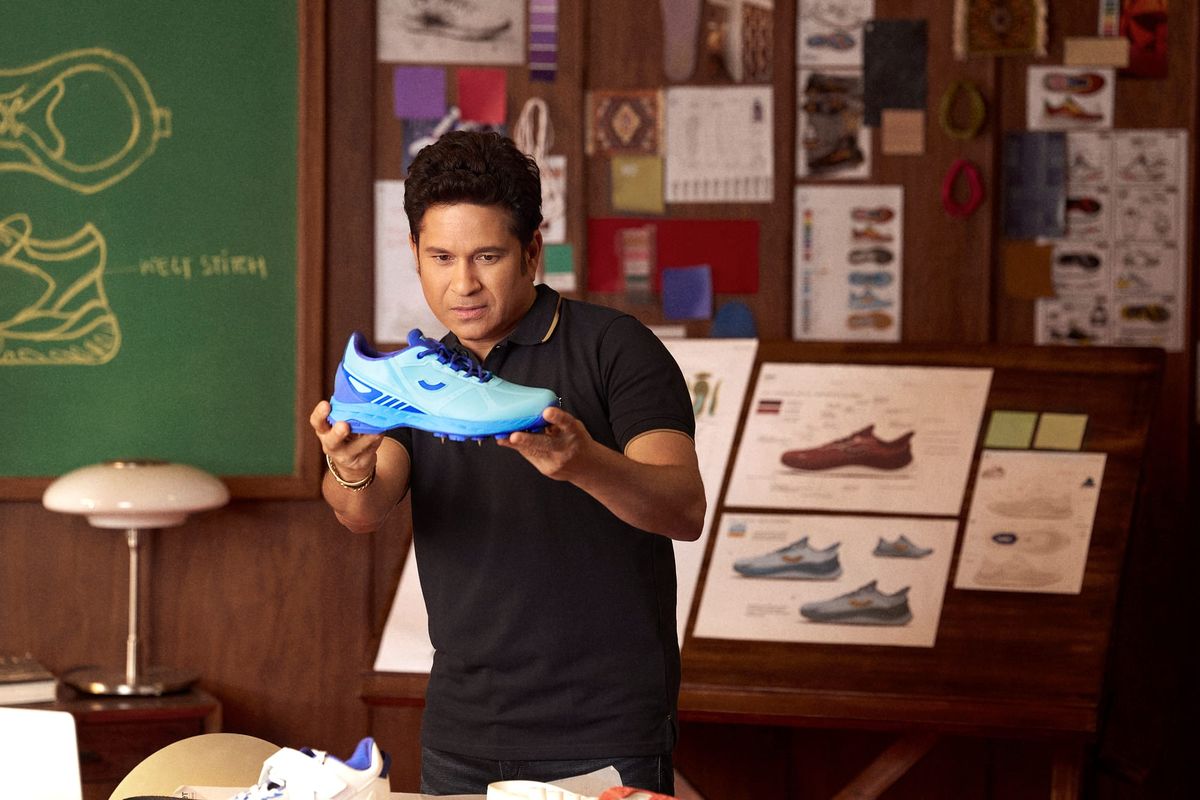
There is a 9 millimetre spike at the heel of Ten x You’s Centurion Pro Batsman shoe that does not touch the ground when you walk. It stays raised until you slip, digging into the surface to stop the slide.
Perfecting the spike took Ten x You co-founders Sachin Tendulkar and Karthik Gurumurthy two months of engineering and repeated arguments over how far they could extend it without weakening the heel. They were trying to find the exact point at which the spike should engage when a batter pivots for a sweep shot.
Two months after its October 10, 2025, launch, orders across the range crossed 5,000, spanning 250 Indian towns, almost entirely without promotion. Ayush Mhatre, the 18-year-old Mumbai opener who broke through with the Chennai Super Kings in the IPL 2025, and now captains the India Under-19 side, is already wearing them.
Ten x You began with a question: Why are almost all professional cricket shoes sold in India designed elsewhere?
Rajan Anandan, managing director at Peak XV Partners, which backed Ten x You through its Surge accelerator programme alongside Whiteboard Capital, sees a wider opportunity. “We believe this is the best cricket shoe on planet earth,” he told The State of Play. “It is only fair that it comes from the nation that is the world’s best in cricket.”
The maidan problem
In May 2024, Gurumurthy led German shoe designers through Mumbai’s famed maidans in brutal pre-monsoon heat. They documented complaints from academies and coaches. International shoes were too narrow, causing heel pain and losing grip on hard maidans. The shoes looked right, but felt wrong.
Tendulkar demonstrated the problem during one of their hours-long sessions by knocking sharply on a table in front of him. That, he told Gurumurthy, is how hard the Melbourne Cricket Ground pitch feels. Before one Australia tour, Tendulkar recalled taking his shoes to a cobbler to have his spikes sharpened, as regular ones merely skate across the unforgiving surface.
“These were real, practical problems coming from people,” Gurumurthy says. “It wasn’t abstract. It was heel pain and narrow fits, and grip issues on dry surfaces. So we said, ‘Fine, we’ll solve it.’”